




Which SUV tackles Ohio trails better for weekend warriors around Columbus, OH — the 2026 Jeep Wrangler or the 2026 Toyota 4Runner?
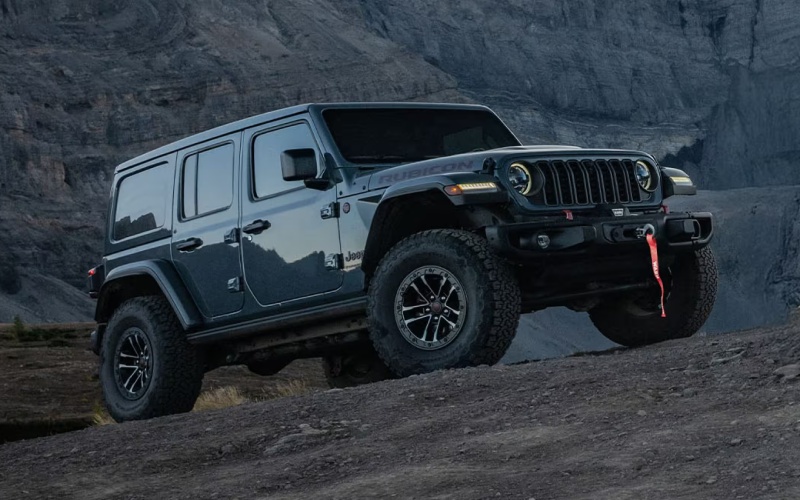
Valley Jeep of Columbus – Which SUV tackles Ohio trails better for weekend warriors around Columbus, OH — the 2026 Jeep Wrangler or the 2026 Toyota 4Runner?
When drivers ask us which is the better trail companion—Wrangler or 4Runner—they are usually asking one question underneath it all: which one gives me more confidence and control when the dirt gets real? This guide unpacks that, step by step, so you can decide which SUV best fits your style of adventure without getting lost in spec-sheet trivia.
Both the 2026 Jeep Wrangler and the 2026 Toyota 4Runner are authentic, body-on-frame SUVs with serious trail cred. But the way they achieve capability—and how that feels on loose rock, ruts, and mud—differs in important ways. Below we break down traction hardware, driveline choice, angles and articulation, visibility and tech, and the ownership experience that follows each rig long after the first trail pinstripe.
Traction hardware and articulation
This is where Wrangler stakes a classic advantage. Solid front and rear axles deliver consistent ground contact across big articulation changes, and Wrangler backs that with available Tru-Lok® electronic locking differentials and an Electronic Sway Bar Disconnect on Rubicon models. The Rock-Trac® 4×4 System can yield an outstanding 100:1 crawl ratio when configured with the manual transmission and the available 4.88:1 axle ratio, allowing you to idle up ledges with minimal throttle. The 4Runner’s available Stabilizer Disconnect Mechanism is a real asset for trail articulation and, on certain trims, pairs with robust shocks (FOX® Internal Bypass QS3 on TRD Pro, Old Man Emu on Trailhunter). However, its independent front suspension, while comfortable and quick to react, does not match the front solid axle’s tire contact consistency when the terrain gets radically uneven.
If your weekend play often involves big cross-axle obstacles or tall rock shelves, Wrangler’s combination of solid axles, selectable lockers, and disconnects tends to feel more controlled with less wheelspin and fewer back-up-and-bump moments.
Driveline choice and gearing
Wrangler offers a rare choice today: a 6-speed manual transmission or an available automatic with both the 3.6L Pentastar® V6 and the 2.0L Turbo. Off-roaders who love precision footwork appreciate the manual’s direct feel and how it pairs with low-range gearing for slow, steady climbs. Command-Trac® and Rock-Trac® systems bring 2.72:1 or 4:1 low ratios respectively, and full-time 4×4 is available for all-weather confidence. The 4Runner counters with part-time and full-time 4WD options and a strong torque story, especially in i-FORCE MAX hybrid form. On paper, that torque is tempting; in practice, Wrangler’s crawl gearing and manual option often translate to less stress, fewer brake-stab corrections, and a more deliberate ascent on technical sections.
Prefer to let the vehicle do more of the work? Both SUVs deliver. But if you enjoy being part of the process—selecting gears, walking the tires onto ledges, and feeling the vehicle settle—Wrangler’s driveline variety is a differentiator.
Angles, clearance, and tires
Angles still matter. On 4-door models properly equipped, Wrangler touts a Best-in-Class available approach angle of 47.4 degrees and offers an Xtreme 35-inch Tire Package from the factory. That rubber not only bumps clearance but also extends the breakover and departure envelope to keep you off the belly and bumper. The 4Runner gives you up to 10.1 inches of ground clearance and wears 33-inch tires on off-road grades—excellent numbers that translate to real capability. In slot canyons of ruts, that extra couple inches of tire and the sharper approach angle can be the difference between gliding over and scraping, and between going straight up a ledge and having to angle across it.
If you value factory-fit tires that tip into 35-inch territory without aftermarket compromise, Wrangler’s package is a compelling advantage.
Visibility, cameras, and cockpit control
Wrangler’s upright visibility and removable doors make it uniquely easy to place tires and spot obstacles by feel. That matters when a quick glance down the hinge line replaces a guess about what the front diff is about to hit. Jeep locates front radar sensors above the rearview mirror—keeping bumper real estate clear for steel bumpers and winches—so nothing important blocks your line of attack. 4Runner’s available Multi-Terrain Monitor (MTM) on the large 14-inch display provides helpful real-time camera views beneath and around the vehicle, which is a genuine benefit in brush and tight switchbacks.
If you want tech-forward visibility from the driver’s seat screen, 4Runner’s MTM is a win. If you want elemental sightlines and open-air awareness, Wrangler maintains an edge.
Trail tools and accessories
From the factory, Wrangler offers a winch-capable steel bumper and even an available factory-installed WARN® winch with an 8,000-pound capacity. Pair that with rock rails, skid plates, tow hooks, and the wide ecosystem of Jeep® Performance Parts by Mopar®, and you can build a very comprehensive trail kit without leaving the dealership. 4Runner supports overlanding and trail life with available pre-wired AUX switches, an onboard air compressor, and robust grade-specific shock packages, making it easy to air back up and wire in lights or a compressor fridge.
Boiled down: 4Runner offers smart integrated utility; Wrangler delivers heavy-duty trail hardware baked into the core of the build.
Everyday life and the drive to the trail
Both SUVs are comfortable enough for the weekday run and flexible enough for weekend camping. Wrangler’s Sky One-Touch® power top and quick-release door hinges turn a sunny evening into a rolling patio in seconds. 4Runner’s signature power rear window, available third-row seating, and massive cargo capacity (up to 90.2 cubic feet) make tailgate duty and family gear management easy.
If your weekends revolve around the drive itself—wind in your hair on back roads, quick top changes when clouds gather—Wrangler’s lifestyle flexibility is difficult to match.
Who should choose what?
Choose Wrangler if you want rock-first hardware like solid axles, lockers, and manual-transmission crawl control, plus the open-air freedom that makes even a short loop feel like an escape. Choose 4Runner if you want Toyota’s latest driver aids in Toyota Safety Sense™ 3.0, tech like MTM, TRD or Trailhunter suspension tunings, and the utility of a power rear window or optional third row.
Still on the fence? Schedule a back-to-back drive over the same rutted lot or gravel cut-through and focus on three things: tire placement ease, throttle/brake corrections at low speed, and how relaxed you feel at the end. The right answer often clarifies itself in those five minutes.
Frequently Asked Questions:
Can I flat-tow these SUVs behind an RV?
Wrangler can be flat-towed when properly equipped and set up as directed in the owner’s manual. The 4Runner, with its automatic transmissions, is generally not flat-towable; consult the owner’s manual for specifics.
Do both offer full-time 4WD?
Yes. Wrangler offers full-time 4×4 via Selec-Trac® or Rock-Trac® (depending on model), and 4Runner offers full-time 4WD on specific trims.
What about factory tires and lift-like stance?
Wrangler’s available 35-inch package delivers factory-backed clearance and angles. 4Runner offers 33-inch all-terrains on off-road grades.
When you are ready to try both on your local routes, stop by for a hands-on walkthrough and a trail-minded demo drive with our team. Valley Chrysler Dodge Jeep Ram of Columbus is serving Columbus, Granville, and Newark with knowledgeable guidance on hardware, accessories, and build paths that fit how you really drive.

0 comment(s) so far on Which SUV tackles Ohio trails better for weekend warriors around Columbus, OH — the 2026 Jeep Wrangler or the 2026 Toyota 4Runner?